

By Better Maid Editorial Team · Updated 2026-08-22
A thorough end of tenancy cleaning checklist covers 8 key areas: kitchen (oven, extractor fan, cupboards), bathroom (limescale, grout, tiles), all bedrooms, living spaces,
A thorough end of tenancy cleaning checklist covers kitchens, bathrooms, bedrooms, and living areas, addressing appliances, skirting boards, windows, and carpets room by room. Tenants bear responsibility for restoring rental properties to their original condition, since inventory checks compare cleanliness against move-in reports. Missing overlooked spots like extractor fans or grout often triggers deposit deductions.
What Does End of Tenancy Cleaning Require?
Returning a rented property to its original condition falls squarely on the tenant, not the landlord or letting agent. Deposit recovery hinges on this single task more than any other move-out obligation. A poorly cleaned apartment gives landlords legitimate grounds for deductions, regardless of how well the tenancy otherwise went.
End of tenancy cleaning differs from routine upkeep because it targets a specific standard, not general tidiness. A structured checklist tells tenants exactly what “clean enough” means before the final inspection, removing guesswork from an already stressful process. Without that benchmark, tenants often clean what looks presentable while missing the details inventory clerks actually check — inside ovens, behind appliances, skirting boards, window tracks.
Better Maid lists this service among its core offerings for London rental properties, alongside domestic cleaning and vacation let turnovers. Every job follows a detailed checklist designed to keep quality and coverage consistent from one property to the next, which matters when a single missed task can trigger a deposit dispute.
What should tenants check before the final inspection?
Tenants should confirm kitchens, bathrooms, floors, and fixtures meet the standard set out in their tenancy agreement or checklist. The table below outlines the areas that typically carry the most weight during inventory checks.
Is hiring help worth it for a move-out clean?
Searching for cleaning near me often becomes urgent once moving deadlines close in. Tenants realize the scope of work involved. Professional teams working through cleaning places near me searches typically know exactly which spots inventory clerks scrutinize, reducing the risk of a rejected clean and a withheld deposit.

What Should You Prepare Before You Start?
Preparation determines whether a tenant walks away with a full deposit or loses money over missed corners and forgotten fixtures. Before touching a mop or sponge, tenants need a plan, supplies, and — for many — a decision about whether to search for professional end of tenancy cleaning or handle the work solo.
Gather these items and confirm these details first:
- Review the tenancy agreement and inventory report for specific cleaning clauses.
- Photograph every room’s current condition for dispute evidence.
- Stock cleaning supplies: multi-surface cleaner, descaler, oven cleaner, and microfiber cloths.
- Decide between DIY cleaning and hiring help, based on available time and property size.
- Book a cleaner at least 48 hours before moving day if outside help is needed.
Is it cheaper to hire a cleaner or do it alone?
Cost depends on time saved versus cash spent. Independent cleaners in London typically charge £15-£25 per hour, while professional agencies charge £26-£35 per hour. Tenants searching for cleaning near me should compare vetting standards, not just price. Deposit disputes often hinge on cleaning quality rather than cost.
How fast can a tenant book a cleaner before moving day?
Better Maid matches tenants with a cleaner within 48 hours of booking. Regular cleaning starts from £21 per hour and one-off cleans are £33 per hour, with no long-term contract required, and scheduling flexes between weekly, fortnightly, or one-off visits. Staff undergo full vetting, and the service runs seven days a week. A practical advantage for tenants racing a moving deadline. For those browsing cleaning places near me in a time crunch, that turnaround window matters more than a marginal price difference.

How Do You Clean Bedrooms and Living Rooms?
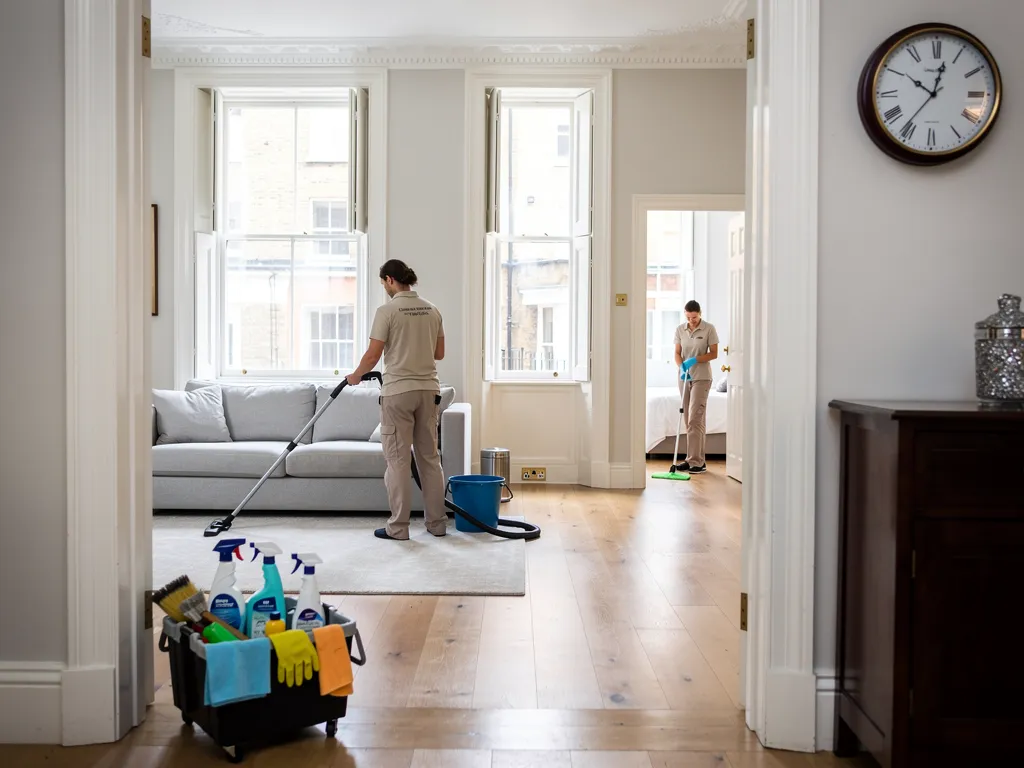
Bedrooms and living rooms demand dust removal first, then surface treatment, then floor work, in that exact sequence. Skipping the dust stage forces cleaners to redo surfaces once particles resettle, wasting time a tenant rarely has before checkout. A structured, room-specific approach turns an overwhelming task into a manageable one.
Follow these steps for each room:
- Clear all dust from ceiling fans, light fixtures, blinds, and shelving before touching anything else.
- Wipe down skirting boards, window sills, and radiators with a damp cloth.
- Treat upholstery, mattress surfaces, and curtains for embedded dust and allergens.
- Vacuum carpets or mop hard flooring only after every upper surface is clean, so debris does not fall back onto finished floors.
- Check corners, behind furniture, and under beds for missed items or dust buildup.
Why Clean Room by Room Instead of the Whole House at Once?
Splitting a moving-out clean by room, rather than tackling the whole property in one sweep, prevents overlooked tasks and reduces fatigue. Working through bedrooms, then living rooms, then common areas keeps progress visible and measurable. Landlords and inventory clerks assess rooms individually, so a staged approach mirrors how the property will actually be inspected.
What Products Should Tenants Use in Bedrooms and Living Rooms?
Eco-friendly formulas remain the safer choice for spaces where children and pets spend the most time. Better Maid’s cleaning teams rely on eco-conscious products specifically to protect households with young families or animals, avoiding harsh residues on carpets and soft furnishings. Tenants without professional support should look for similarly gentle, non-toxic alternatives before deep-cleaning these rooms.
For tenants short on time, arranging end of tenancy cleaning through a checklist-driven service ensures nothing gets missed across every room. Searching for reliable cleaning near me or comparing local cleaning places near me helps tenants find teams that follow the same detailed, room-by-room standard inspectors expect.

How Do You Deep Clean the Kitchen?
Kitchen inspections fail more inventory checks than any other room in a rented property. Grease, grime, and burnt-on residue hide in places tenants rarely think to check, and inventory clerks check them anyway. A structured approach prevents costly deposit deductions.
- Clear all surfaces, cupboards, and the fridge completely before cleaning begins.
- Degrease the extractor fan filter and hood using hot water and dish soap.
- Scrub the oven interior, racks, and glass door with an oven-safe degreaser.
- Address the stovetop grates directly, since cast iron grates accumulate a thick coating of burnt residue and grease over time.
- Wipe down cupboard fronts, handles, and interior shelving.
- Clean the sink, taps, and drain area, removing limescale buildup.
- Mop the floor last, working from the far corner toward the doorway.
Why do stove grates need special attention?
Grates sit at the center of most deposit disputes over kitchen cleanliness, and inspectors examine them closely. Grease left untreated does not stay static. It thickens and hardens, making the same job progressively harder the longer it waits. A grate wiped weekly takes minutes; one left for months may require soaking and scraping. Beyond appearance, built-up grease on burners is highly combustible, turning a cosmetic oversight into a genuine fire hazard that landlords and letting agents take seriously during inspection.
Should tenants hire professional deep cleaning?
Tenants short on time or facing a stubborn kitchen often benefit from professional help. Deep cleaning a full property, kitchen included, typically runs between £60 and £400 depending on size and condition. For tenants searching cleaning near me in the final week of a tenancy, comparing local cleaning places near me against a dedicated end of tenancy cleaning package often proves more reliable than a rushed DIY effort, particularly when grease and grime have had time to set in.
How Do You Clean the Bathroom Thoroughly?
Bathrooms demand a strict sequence: descale first, disinfect second, polish last. Skipping this order leaves streaks on mirrors and residue on grout, both common inventory-check failure points. Landlords inspect limescale on taps, mold in grout lines, and soap scum on shower screens more closely than almost any other room. A tenant searching for end of tenancy cleaning guidance needs a repeatable method, not guesswork.
Better Maid’s bathroom process follows a fixed sequence for every property, regardless of size or layout.
- Clear surfaces of toiletries, towels, and bins before applying any product.
- Apply a descaling solution to taps, showerheads, and drains; let it sit for several minutes.
- Scrub grout lines and tile grout with a stiff brush to elevator trapped mold.
- Disinfect the toilet bowl, seat, and base, working from cleanest to dirtiest surface.
- Wipe mirrors and glass with a streak-free solution and a microfiber cloth.
- Finish with floor mopping, moving toward the door to avoid re-tracking dirt.
Every product used across this sequence is safe for households, since cleaning near me searches often surface providers using harsh, industrial-grade chemicals unsuitable around children or pets. Eco-friendly formulas lower that risk while still cutting through limescale and soap buildup.
Who Actually Cleans the Bathroom During an End-of-Tenancy Visit?
Fully vetted, DBS-checked cleaners handle every bathroom clean, not subcontracted or unverified staff. Consistency matters most at inventory check: the same standard applies whether the property is a studio or a five-bedroom house.
Are All Cleaning Places Near Me Equally Reliable for Deposit Returns?
No. Providers vary widely in vetting standards and staff turnover, which affects consistency between visits. Tenants comparing cleaning places near me should confirm background checks and product safety before booking. Inconsistent standards raise the risk of failed inspections.
How Do You Finish Windows and Floors?
Windows come first, floors come last. That sequence prevents dust and streak residue from resettling on a freshly mopped surface. Tenants preparing for end of tenancy cleaning often reverse this order, then wonder why inventory clerks flag smears along skirting boards.
Before starting, gather a lint-free cloth, glass cleaner, a microfiber mop, and a vacuum with a hard-floor attachment. Natural light exposes streaks that artificial lighting hides, so schedule this task during daylight hours whenever possible.
- Vacuum window tracks and sills to remove loose debris before applying any liquid.
- Wipe interior glass with a lint-free cloth and glass cleaner, working top to bottom.
- Dry frames and tracks completely to prevent mold growth before the next tenancy begins.
- Vacuum floors room by room, moving furniture rather than working around it.
- Mop hard floors last, using minimal water near skirting boards and radiators.
Skipping this order, or leaving the task for the final hour before keys are returned, mirrors the failure pattern of reactive, non-scheduled maintenance: rushed effort, missed spots, and disputed deposit deductions. A structured, room-by-room approach avoids that outcome entirely.
Should Tenants Handle Windows and Floors Alone or Hire Help?
Time pressure, not skill, is usually the deciding factor. Better Maid serves final-touch cleaning across Chelsea, Kensington, Westminster, Pimlico, and Canary Wharf, giving tenants in those neighborhoods a faster alternative to solo scrubbing. Operating from a Poplar High Street base near Canary Wharf, the team responds quickly to move-out timelines with flexible scheduling. This is the value proposition of contract cleaning: consistent standards on a fixed timetable, rather than a last-minute scramble.
Support runs seven days a week, which matters when a tenancy end date falls on a weekend. Tenants searching for cleaning near me or comparing cleaning places near me gain a same-city option built specifically for inventory-critical turnarounds.
Should You Hire Cleaning Near Me or DIY?

Renters facing checkout day confront a real choice: tackle the apartment alone or book professional help. DIY cleaning saves cash upfront but risks costly deposit deductions if inventory clerks flag missed grease, limescale, or carpet stains.
Searching for cleaning near me turns up dozens of local operators, and pricing quality varies widely across the capital. Better Maid prices end of tenancy cleaning as a fixed quote based on property size, with no long-term contract required for a one-off visit before handover. That apartment, transparent rate simplifies budgeting for a move that already strains finances.
London costs sit above the national picture. Elevated labor rates, congestion charges, and parking fees push cleaning prices in the capital higher than in most other UK regions. Factoring this gap into a moving budget prevents sticker shock when comparing quotes from cleaning places near me against prices advertised outside London.
Is it cheaper to clean the apartment myself before moving out?
Cleaning solo costs less in cash terms but carries hidden risk. A missed oven interior or grimy extractor fan can trigger deductions that outweigh the price of a professional visit several times over.
What does a professional end of tenancy clean guarantee?
Better Maid backs every clean with a a notable share satisfaction guarantee and consistent, transparent pricing. Tenants receive a documented, checklist-driven service built to satisfy inventory clerks, not a rushed weekend scrub.
Weighing the two paths comes down to four steps:
- Review the move-in inventory report to flag existing problem areas.
- Estimate hours needed for a thorough DIY clean, including ovens, windows, and carpets.
- Compare that time cost against a fixed-price professional end of tenancy quote.
- Book the visit early, since move-out dates cluster heavily at month-end across London.
Skipping this comparison altogether often costs more than either option alone.
What Mistakes Cost Tenants Their Deposit?

Inconsistent cleaning quality causes most deposit disputes, not property damage or unpaid rent. Landlords may withhold funds when a rental fails to come back in good, clean condition, using cleaning costs as the basis for deductions. Across the UK, cleaning stands out as the single most common reason for end of tenancy negotiations between landlords and tenants, and disputes occur even more frequently within student tenancies.
Tenants often underestimate how granular an inventory check can be. A quick surface wipe rarely satisfies what a landlord or letting agent expects at handover. The gap between “tidy” and “inspection-ready” is exactly where deposits get lost.
Which cleaning mistakes trigger deposit deductions most often?
Certain oversights appear again and again in disputed inventory reports. Tenants searching for cleaning near me the week before moving out often miss these entirely:
- Skipping oven interiors, extractor fans, and behind large appliances.
- Leaving limescale buildup in bathrooms and kitchens.
- Ignoring skirting boards, window tracks, and light fixtures.
- Ignoring carpets that need professional treatment rather than a quick vacuum.
- Booking an unreliable cleaner from a list of random cleaning places near me without checking reviews or guarantees.
Does hiring a professional cleaner actually protect a deposit?
A service backed by a satisfaction guarantee lowers the risk of a failed inventory check tied to inconsistent results. Professional end of tenancy cleaning follows a structured checklist rather than a rushed, last-minute effort. That structure matters more than intent; landlords assess outcomes, not good intentions.
Tenants who treat cleaning as a final afterthought consistently pay for it later. A guaranteed, documented clean removes the guesswork from an inspection that determines whether a full deposit gets returned.
FAQ
Who is responsible for end of tenancy cleaning?
The tenant, not the landlord or letting agent, must restore the rented property to its original condition. A poorly cleaned apartment gives landlords legitimate grounds for deposit deductions.
Which areas do inventory clerks scrutinize most closely?
Inventory clerks focus on oven interiors, extractor fans, and cupboard interiors in kitchens. Grout, limescale, and extractor vents in bathrooms; skirting boards and corners on floors; and sills, tracks, and glass on windows.
Is hiring a cleaner cheaper than doing it alone?
Independent cleaners in London charge £15-£25 per hour, while professional agencies charge £26-£35 per hour. The cheaper option depends on the time saved versus the cash spent.
Conclusion
In closing, a systematic end of tenancy cleaning checklist transforms property transitions from potential liability into documented compliance. By addressing each surface, fixture, and specification methodically, landlords and tenants establish clear accountability and protect deposit settlements. Professional execution of this protocol eliminates disputes, preserves property condition, and demonstrates the operational rigor that distinguishes responsible property management from negligent oversight.